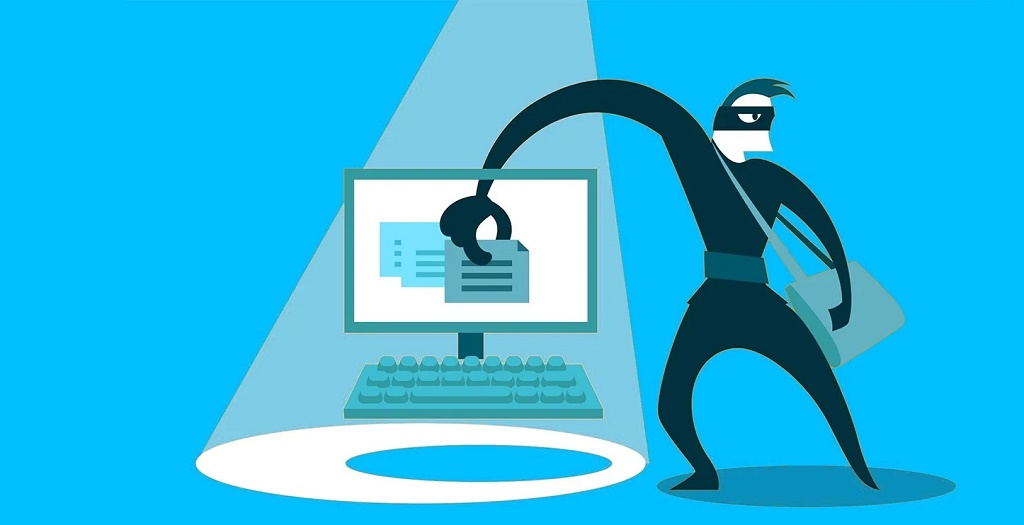
How to Protect Your Blog Content From Theft and Plagiarism Online
Contrary to what many people think, creating web content is hard work. Creating quality content takes a lot of time, research, planning, organizing, brainstorming, and editing. Depending on the length of your content, it can really be a time-consuming process. That’s why it’s so frustrating and heartbreaking when you find out that someone has stolen your work without your permission and without giving you any credit.
Even worse, most of the time you don’t even know that someone has copied your work. Plus, if you’re constantly having to research, plan, organize, brainstorm, and edit, how can you possibly keep up? Well, it’s definitely hard, but not impossible. Let’s take a look at some methods that will help you keep up with the theft of your content and even have it taken down if needed.
Copyright Your Work
According to About.com, “a copyright is a form of intellectual property law which protects original works of authorship […]. Copyright law does not protect facts, ideas, systems, or methods of operation, although it may protect the way these things are expressed.”
Obtaining a copyright for your work will take some time, and it can be a lengthy process. Plus, it’s not free and can end up being quite expensive (depending on your country and circumstances). There are copyright rules and regulations for each country, so you’ll really need to do your research before taking this route. Make sure to go over the copyright laws and use the appropriate website for your country.
While your work is actually copyrighted the moment you create and publish it on the web, an actual copyright registration is always better and serves as legal proof whenever a problem arises.
Additionally:
Even if you don’t formally register your copyright, keeping records such as original drafts, publishing dates, and screenshots can help you prove ownership if a dispute occurs later.
Obtain a License
I’m sure you’ve heard of Creative Commons licenses, especially for images. It is a free copyright license that lets you set the rights for how other people can use your work. You will, of course, keep your copyright, but it gives others the ability to use and distribute your work as defined by you. As you can see from the different types below, a Creative Commons license can range from one extreme to the other.
The 6 different types of licenses:
Attribution – others can use and edit your work (even commercially) as long as they give you credit.
Attribution Share Alike – others can use and edit your work (even commercially) as long as they give you credit and license their new creation using the same terms as yours.
Attribution-NoDerivs – others can use your work (even commercially), but cannot edit it and must give you credit.
Attribution-NonCommercial – others can use and edit your work (non-commercially only) as long as they give you credit, but they do not have to license their creation under the same terms as yours.
Attribution-NonCommercial-ShareAlike – others can use and edit your work (non-commercially only) as long as they give you credit and license their creation under the same terms as yours.
Attribution-NonCommercial-NoDerivs – others can use your work (non-commercially only), but cannot edit it and must give you credit.
Select a License
It’s pretty easy to select a license for your content, and they’ll give you an HTML code so that you can add the license information to your website or blog for all to see.
DMCA Protection Badge
DMCA offers another free alternative to protecting the content on your site. “The DMCA.com Protection Badge guarantees that online criminals and content thieves hesitate before copying your original material.” It’s as simple as registering and then adding a badge to your website or blog. They have 50+ badge designs to choose from, and your protection includes page tracking and monitoring, plus one free DMCA takedown per year. You can also build your own badge and even add a watermark to all of your images.
Check for Plagiarism
There are various duplicate checking websites that can quickly search for copies of your content on the web. For most of them, you either enter the URL of your content or copy and paste the text to start a search.
Check for duplicate content using these sites:
CopyGator
Article Checker
Plagium
Dupli Checker
Copyscape
With most tools like this, you have to manually search on a regular basis, but CopyGator (listed above) will continually monitor your content and alert you whenever it’s copied. So it’s definitely a good idea to sign up for that service.
Instructions: What to Do When Your Content Is Stolen
First, identify the copied content using plagiarism detection tools and collect evidence such as URLs and screenshots. Next, contact the website owner politely and request content removal or proper attribution. If that fails, submit a DMCA takedown request to the hosting provider or search engine. Finally, monitor your content regularly to prevent repeated theft.
Case Study: How a Blogger Recovered Stolen Content
A niche blogger discovered that several of their articles were copied word-for-word by another website ranking higher in search results. Using Copyscape and DMCA tools, they documented the violations and submitted takedown requests. Within weeks, the copied content was removed, and the original site regained its rankings and traffic, proving that proactive action against content theft pays off.
Final Thoughts
Don’t let content thieves get away with stealing your hard work. While it’s tempting to ignore the issue instead of going through a lengthy removal process, this could actually cause even more problems for you. Even though you’re the originator of the content, you could get penalized by search engines for having duplicate content. If it keeps happening, your website can even get banned from search engines altogether, which will also hurt your rankings and traffic.
So it’s really important to keep up with your content and make sure you take action when you find out that it has been copied. Unfortunately, playing the “nice guy” won’t get you anywhere when it comes to content theft. Never be afraid to stand up for what’s yours.
Delhi Courses Academy is a leading institute offering the best digital marketing course in Delhi NCR known for its practical training, affordable fees, and industry-focused curriculum. With 15+ certifications, 100% placement assistance, and hands-on projects, it prepares students for real-world challenges.