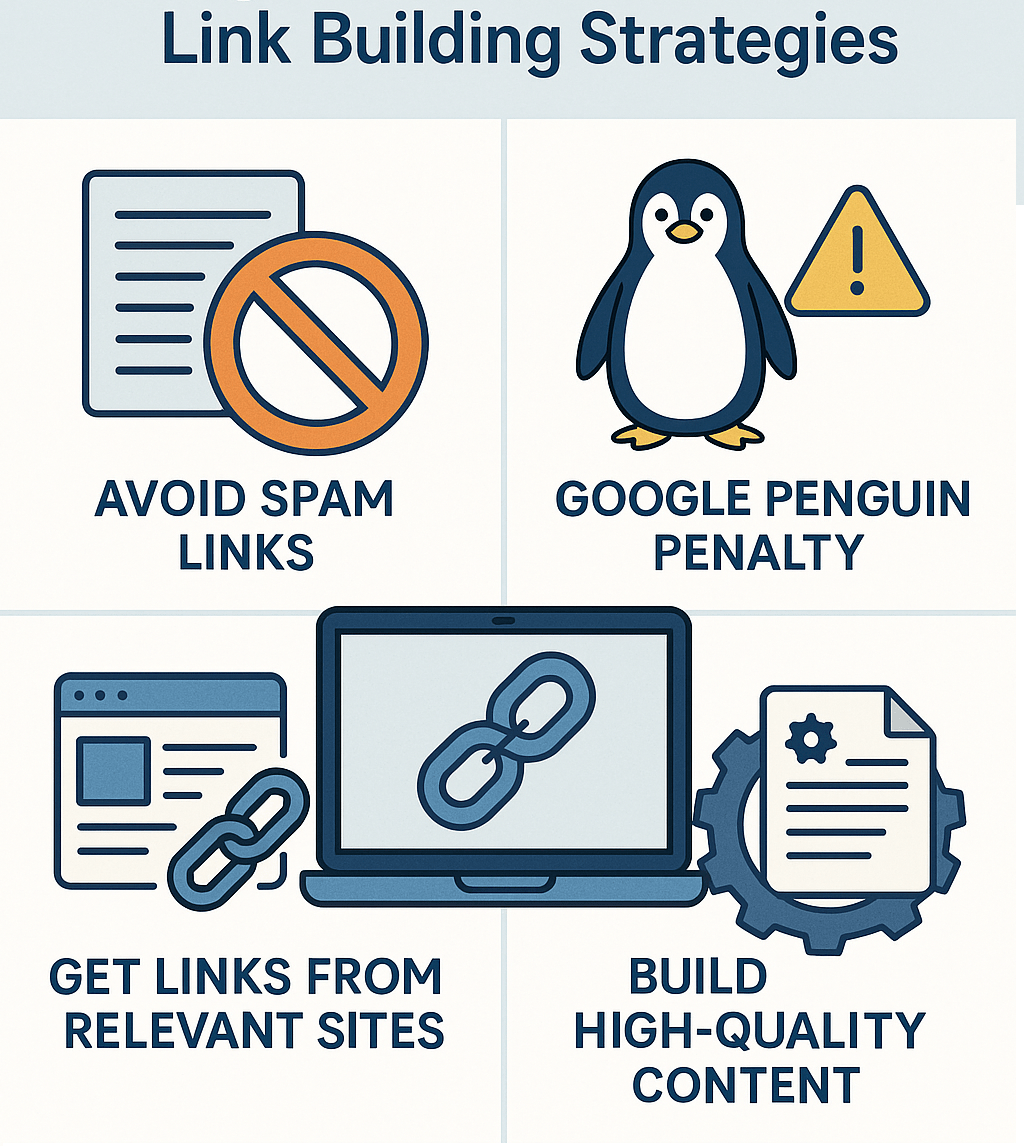
There are numerous ways through which you can produce backlinks for your website or blog, however not all of them are secure. Your site may be punished at any time if you are using unnatural link building techniques. Google is extremely strict in their web spam policies, and recently they launched Google Penguin 2.0 to stop such spam exercises over the net. Search engines are getting smarter day by day, and they can effortlessly distinguish any sort of spam systems used to create backlinks.
There are numerous online organizations offering an immense number of backlinks in an extremely little amount of money and with little effort, yet I am damn sure that these tricks are not safe. Maybe these things will work for you for a few days; however, your website will surely be punished from indexing if you are using such techniques. So let’s see which link building techniques to avoid.
(Google algorithms like Penguin, SpamBrain, and Link Spam Update can devalue manipulative links instantly.)
Automated Link Building Softwares
There are numerous sorts of software coming in the market that offer link building with very little effort, but remember these techniques are not safer and these softwares do not create quality backlinks. These softwares create backlinks to low-quality websites with duplicate content (in titles, descriptions, and other tags). These links are not safe or anti-penguin, and your site will get penalized in all major search engines.
(Automated tools also leave identifiable footprints that search engines use to detect spam networks.)
Example: Spam Footprint
Same anchor text repeated
Links built on auto-approved directories
Links in spun articles with duplicate content
Case Study 1: Affiliate Blogger Penalized (India)
A health niche blogger used automated link building tools to create 5,000 backlinks in 10 days.
Results after 2 months:
Rankings dropped from page 1 to page 7
90% organic traffic lost
Required 6 months of cleanup and reconsideration requests
Paid Link Building
Google is exceptionally strict in buying or selling links. Many websites offer links from high PR pages, but these links are not safe because they pass PR juice from a high PR site, and they come under paid links category. It looks very good, but it’s not profitable in longer terms. So try to avoid such links.
(Google issues manual actions for paid links, which can instantly remove pages from search results.)
Example: Paid Links Marketplace
Popular link marketplaces sell:
Homepage links
Sidebar links
Blogroll links
Sponsored posts
Google often identifies them through:
Advertiser footprints
Repeated anchor patterns
Identical IP hosting networks
Case Study 2: E-commerce Brand Penalized (US)
An online store paid for links on 50 high-DA blogs.
Results:
Short-term boost for 3 months
Sudden drop after algorithm update
Lost 75% keywords from top 50 rankings
Buying Links from Blogs
Generating links on high PR relevant blogs through guest posting and comment posting are two best commonly used link building strategies. But there are many webmasters that create a network of high PR blogs and offer backlinks on them. Few years back it was difficult for search engines to recognize such links, but not now. Today’s search engines have discovered many advanced algorithms which can easily detect such links and can penalize your site from ranking and indexing. So if you get any offer to get links on blogs for a little amount of money, don’t engage with that and simply say no to such things.
(Private Blog Networks (PBNs) often use expired domains, hosting clusters, and hidden link schemes which Google can detect easily.)
Example: PBN Warning Signs
Blogs with no social engagement
Thin content and generic topics
Same layout across 10+ sites
Homepage stuffed with outgoing links
Case Study 3: Digital Marketing Agency (Australia)
A small agency built a PBN of 20 domains for their clients.
Result after Google update:
Entire PBN deindexed
Client sites penalized
Agency lost contracts worth $50,000
Links from Footer and Free Work
These links are mainly created by web design, development or SEO service provider companies. They create links on the footer of websites that they design or develop for their customers. According to Matt Cutts in a video, these links are safer until they are natural and relevant. But after Google Penguin 2.0 these link building techniques are not safer anymore. Many other development companies are also using these techniques via free plugins and WordPress themes. These practices are not anti-penguin anymore, and we suggest you ignore such things.
(Footer links often overuse exact match anchors, making them look manipulative.)
Example: Over-Optimized Footer Anchors
“Best SEO Company Delhi”
“Cheap Web Design New York”
“Buy Backlinks Cheap”
Case Study 4: Web Design Firm (Mumbai)
A design agency added 1,200 footer links across client sites with SEO anchor text.
Results:
Site penalized with manual action
Rankings dropped
Removed all links and filed reconsideration
SEO strategies and practices are getting changed day by day, and we have to discover new and relevant things to keep our websites and blogs above our competitors.
(Focus on natural link acquisition through content marketing, topical authority, and digital PR.)
Practical Safe Alternatives (Added Info)
Guest posting with branded anchors
Linkable assets (studies, tools, templates)
Help a Reporter Out (HARO)
Local business directories
Podcasts, interviews, webinars
Community participation (Quora, Reddit, forums)
Final Takeaway
If a link can be bought, automated, or placed without editorial approval, Google will likely treat it as spam.
Natural links earned through value, not manipulation, are the strongest ranking signal today.
Delhi Courses Academy is a leading institute offering the best digital marketing course in Delhi NCR known for its practical training, affordable fees, and industry-focused curriculum. With 15+ certifications, 100% placement assistance, and hands-on projects, it prepares students for real-world challenges.